
Designer Self-Development System
At inDrive, I built a system for managing designers' professional growth in the context of rapid team and product scaling.
As the company grew, it became clear that development could not remain unstructured. There was no shared understanding of levels, expectations, or growth paths, which limited the predictability of team development.
Approach
I introduced a system of individual development plans based on three core principles: • personalization instead of one-size-fits-all requirements • alignment between development and product needs • transparent evaluation and growth criteria
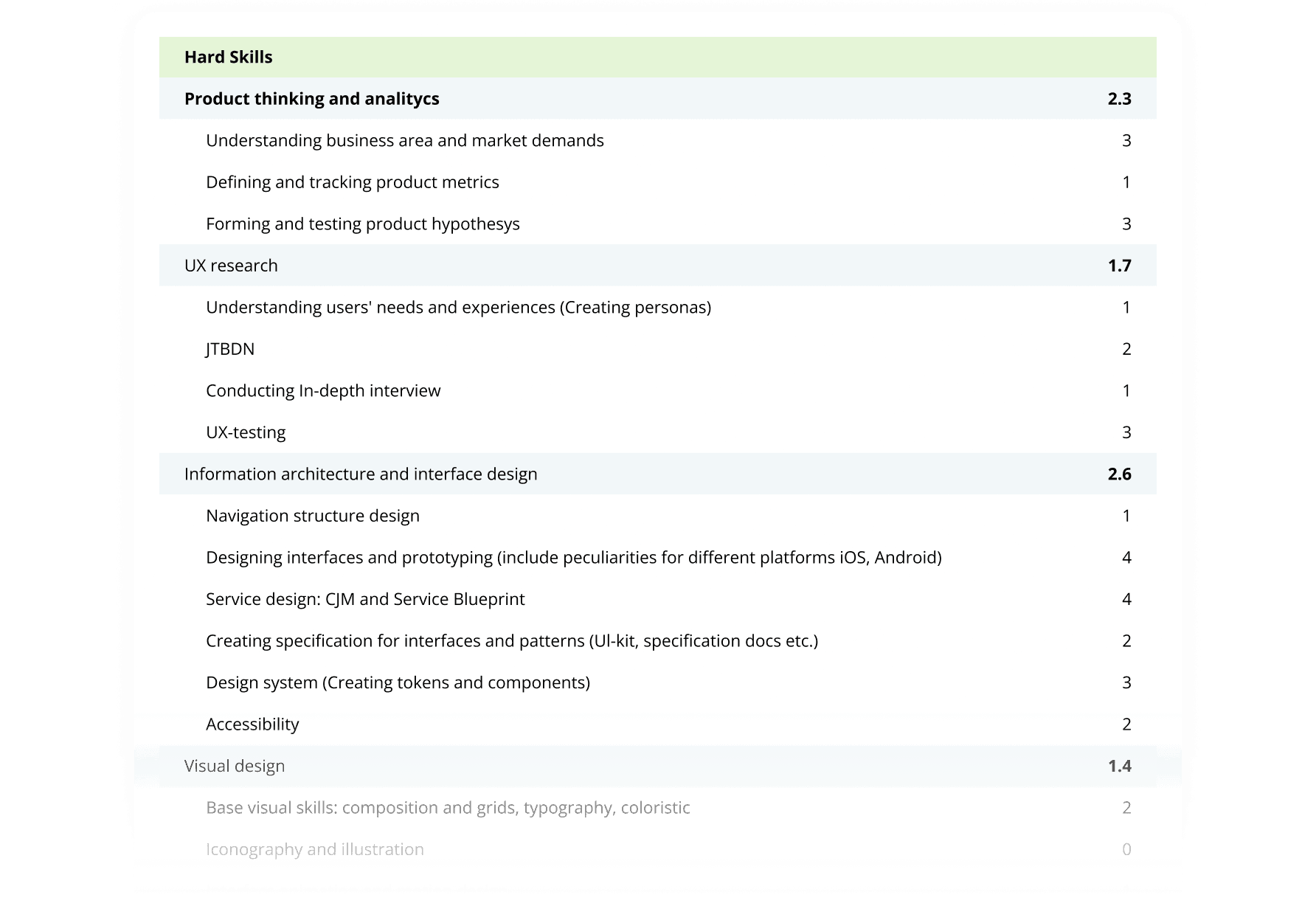
At the core of the system was a flexible skill map covering both hard and soft skills, combining self-assessment with manager calibration. Levels were defined not by a total score, but by a combination of competencies, critical skills, and product impact.
Implementation
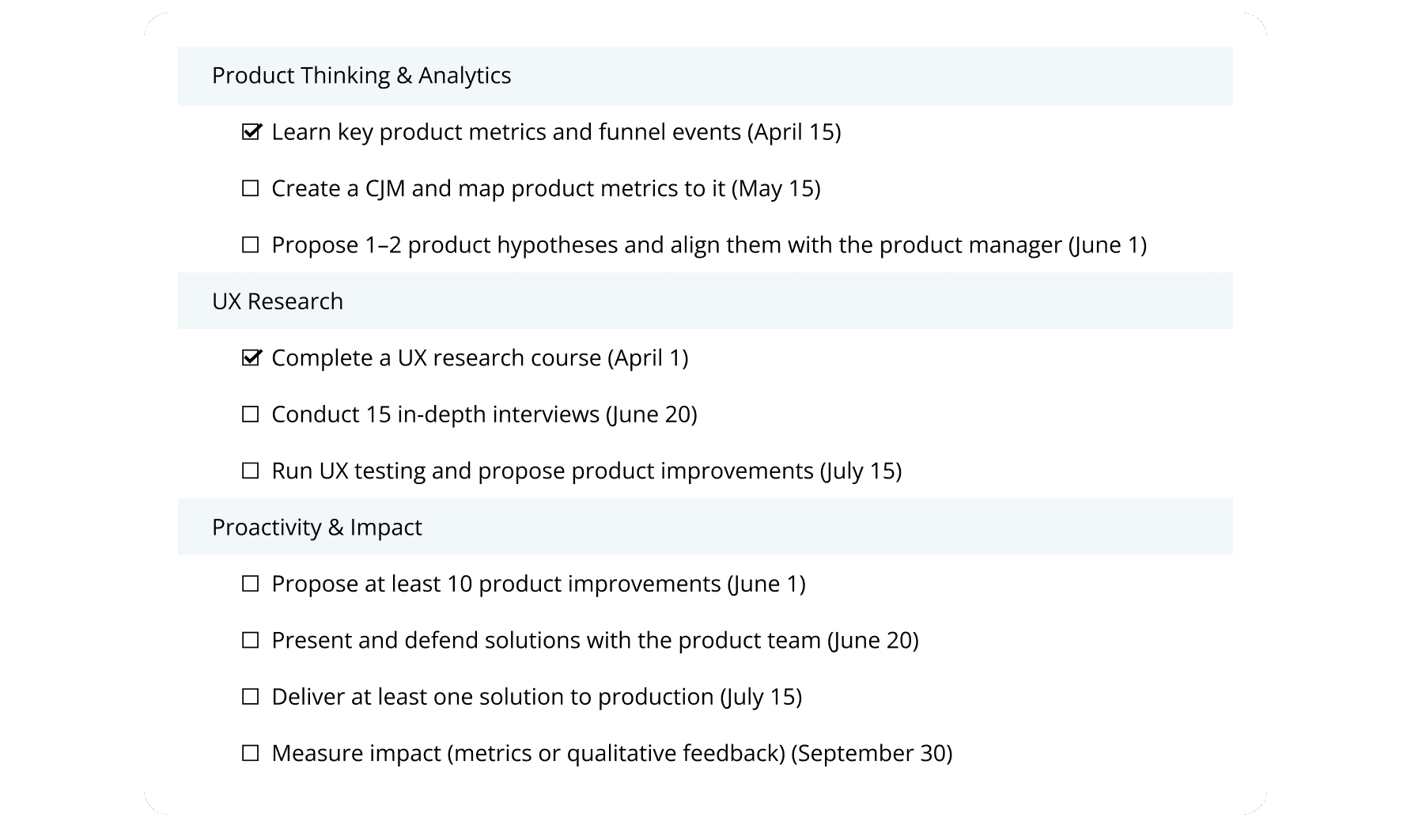
Each designer created an individual development plan that included: • priority skills • specific actions • checkpoints embedded into real work tasks
Plans were regularly reviewed based on performance reviews, feedback, and changes in product priorities. Over time, this approach was scaled to design leads, where it was used to support their growth as leaders, with a focus on management, strategy, and cross-functional collaboration.
Outcome
The system allowed us to: • make team development more structured and predictable • align expectations for different levels across the organization • plan the future skill set of the team • increase designers' ownership of their career growth
It also helped better align team development with product needs, respond faster to shifting priorities, and improve the team's ability to scale alongside the product.
Key Insight
Team development is not a set of initiatives, but a system. Connecting business goals, transparent criteria, and individual development plans enables teams to scale without losing quality or focus.