
Scoring System for Hiring Product Designers
At inDrive, I was responsible for developing the Product design department, including building and scaling hiring processes. As the team and product scale grew, one of the key challenges was the lack of a shared understanding of what we were looking for in candidates.
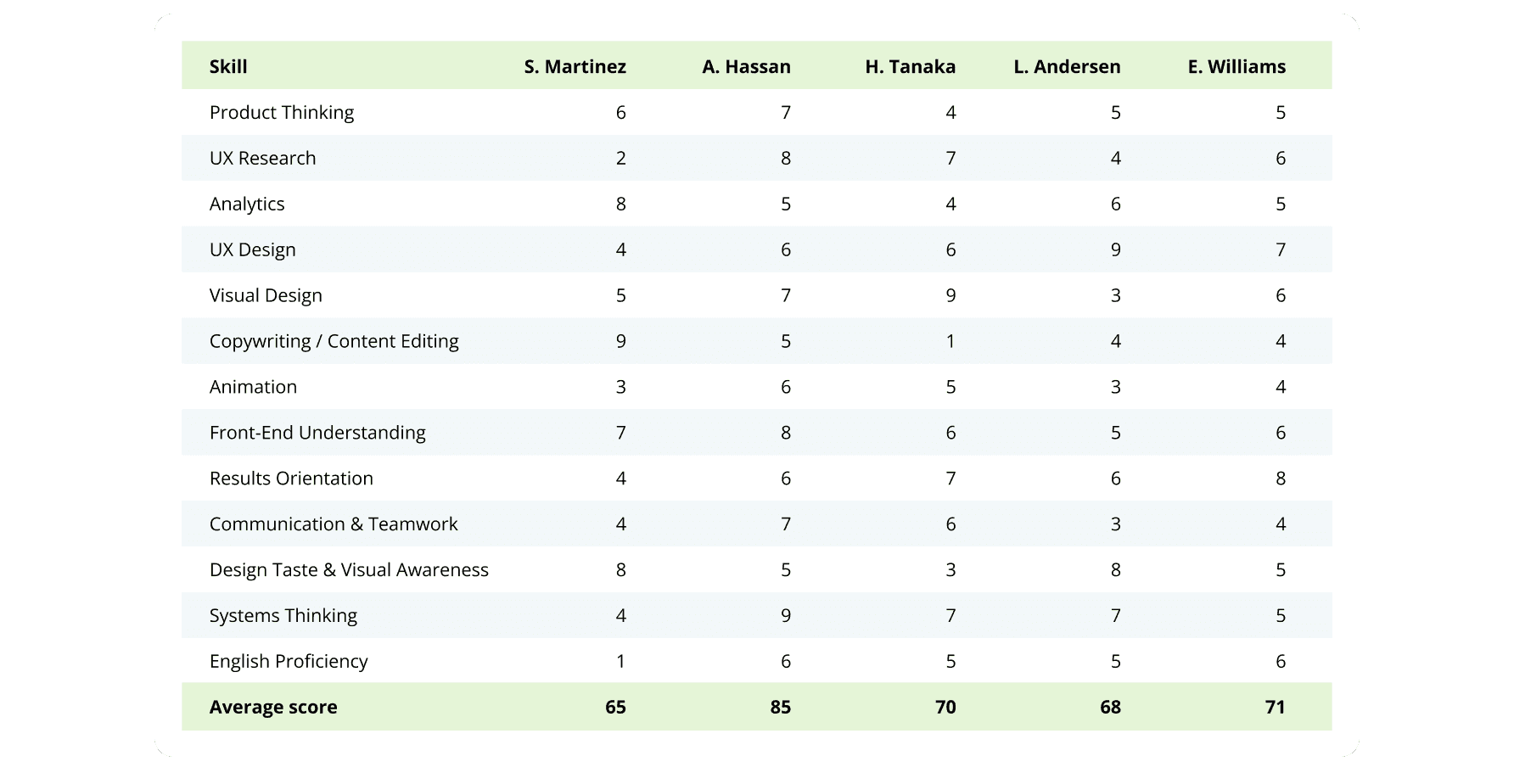
Up to 4—5 stakeholders were involved in the hiring process, design leads, product managers, engineers, and recruiters. Each had different expectations – from visual quality to product thinking and communication skills. This led to subjective evaluations, longer decision-making cycles, and inefficiencies in the hiring process.
Approach
I implemented a structured evaluation system that aligned the team before interviews and made the process more transparent and manageable.
We started by defining the context of the role: • what problem the hire was expected to solve • the role the designer would play within the product • expectations for the first 3—6 months
This helped shift from a vague 'strong designer' profile to a clearly defined candidate profile.
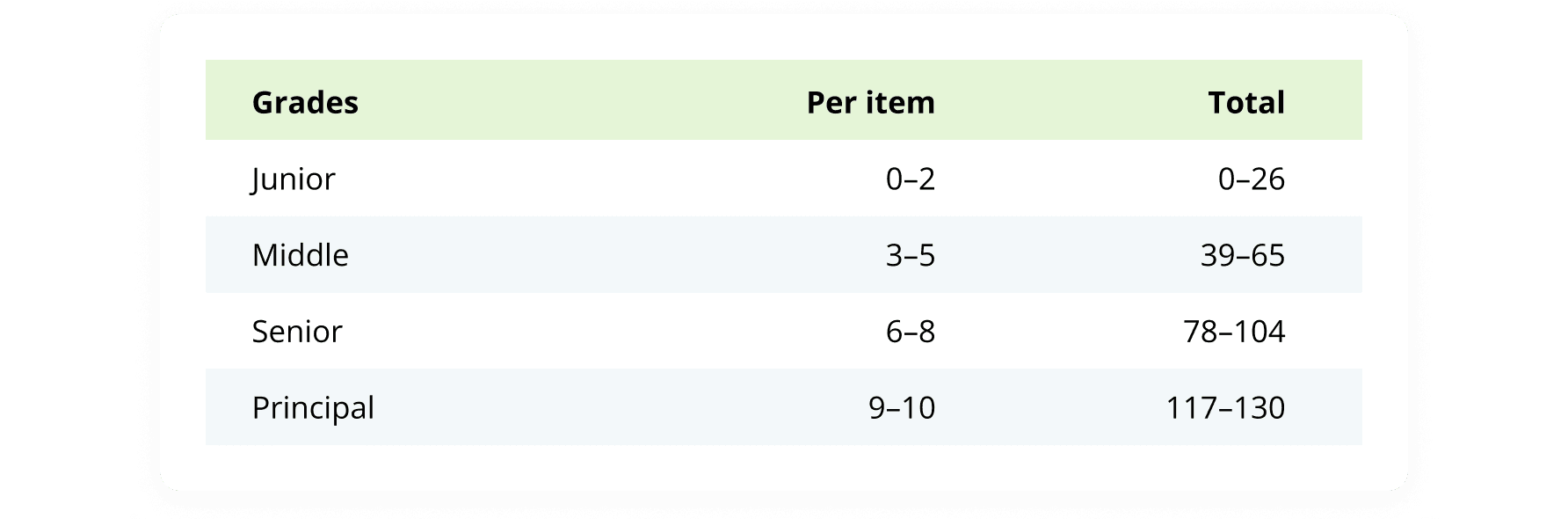
Next, we introduced a scoring system where: • сandidates were evaluated against 13 key competencies. • each competency had clearly defined criteria and a rating scale • all interviewers followed a shared evaluation framework
Each candidate went through 3—4 interview stages, resulting in a structured and aligned view of their skills and grade.
Outcome
This approach allowed us to: • reduce decision-making time for candidates • minimize repeated discussions • improve alignment across stakeholders • make the hiring process more transparent and predictable
Most importantly, we moved from hiring 'generally strong designers' to hiring people who directly addressed product needs and strengthened the team.
Key Insight
I see hiring as a structured, product-driven process rather than a series of interviews. The quality of hiring depends not only on candidates, but on how well the team is aligned around expectations and evaluation criteria. Building such a system enables teams to scale without compromising the quality of decisions.